
Advertisement
Most used-car test drives go the same way: the seller rides along, the radio is on, the route is a quick loop past a few stop signs, and the conversation covers everything except the car. Ten minutes later you’re back at the curb with a vague feeling that it “drove fine,” which is not much to base a large purchase on.
A useful test drive is closer to an examination. The car should start cold, work through a mix of roads, and be asked to accelerate, brake, turn and cruise while you pay attention with your ears, hands, feet and eyes. You won’t diagnose problems the way a mechanic would, but you’ll notice the symptoms that tell a mechanic where to look, and you’ll catch the kind of flaw that no inspection report captures, like a seat that hurts your back after twenty minutes.
Advertisement
Plan a Route That Asks Something of the Car
Before you get in, agree on a route with the seller and allow at least half an hour. Include slow residential streets, a rough or patched road, a stretch at highway speeds with a merge ramp, a hill if one is nearby and an empty parking lot where you can turn the wheel fully and brake firmly without bothering anyone. A loop that includes all of those shows far more than a lap around the block.
Confirm the practical details too. The car should be currently registered and insured, and you should bring your driver’s license; the seller may want to photograph it, which is reasonable. Who is covered when a buyer drives someone else’s car depends on both insurance policies and on the rules in your state or province, so ask the seller whether their policy covers you, and check your own.
Ask the seller to turn the radio off and, if they’re comfortable, to let you concentrate for stretches of the drive. You can chat at the end. If you bring a friend, have them ride in the back and listen from there, since some noises, like a rear wheel bearing or a loose exhaust hanger, are easier to hear from the back seat.
Adjust the seat, mirrors and steering wheel before you pull away, and notice whether you can get comfortable at all. Visibility, headroom, seat support and how easy it is to reach the controls matter as much as mechanical condition on a car you’ll drive every day.
The Cold Start and the First Few Minutes
Ask the seller not to run the car before you arrive, then put your hand on the hood to confirm it’s cold. Watch the tailpipe as the engine turns over. A puff of vapor that fades quickly is normal on a cool day. Blue-tinged smoke suggests oil burning, thick white smoke that keeps pouring out with a sweet smell can point to coolant entering the cylinders, and black smoke usually means the engine is running rich.
Listen closely during the first minute. A rapid ticking that fades as the engine warms can be normal on some designs but can also indicate low oil or worn valvetrain parts. A deep knock that stays or grows is a bad sign. A squeal that goes away after a few seconds is often a slipping belt. The idle should settle to a steady, smooth rhythm without the engine shaking on its mounts.
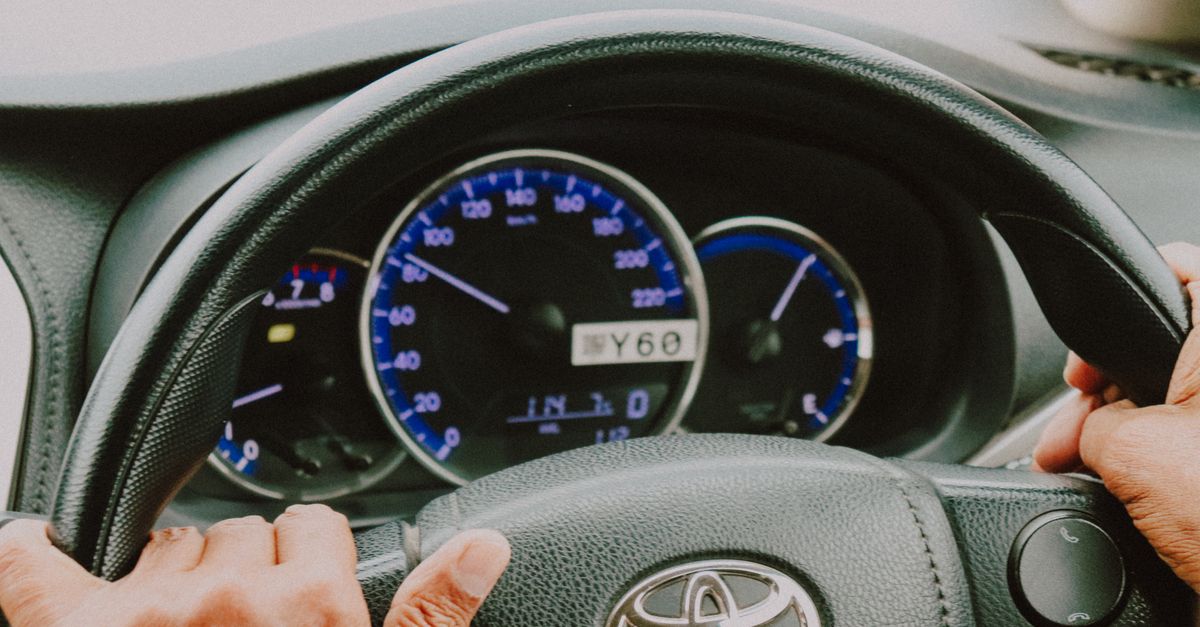
Glance at the dashboard as you set off. All warning lights should have lit briefly at startup and then gone out. The temperature gauge should climb gradually to its normal position and stay there for the rest of the drive, no matter how hard you use the car.
How the Engine and Transmission Respond
Once the engine is warm, accelerate firmly from a stop and up a merge ramp. Power should build smoothly without hesitation, stumbling or surging. A jerky, uneven pull under load can indicate a misfire, and a check engine light that starts flashing during acceleration means a serious misfire that can damage the catalytic converter, so ease off if that happens.
With a conventional automatic, pay attention to each shift. Upshifts should be quick and nearly imperceptible, and the engine speed shouldn’t flare up between gears as if the transmission briefly lost its grip. Put the car in drive and reverse from a stop; a long delay or a heavy clunk when it engages deserves attention. A shudder at light throttle at moderate speed can point to a torque converter problem.
Continuously variable transmissions don’t shift in steps, so listen instead for a whine that rises with speed and feel for a judder or slipping sensation when you pull away gently. With a manual, notice where the clutch engages; a clutch that bites only near the very top of the pedal travel is usually worn. Grinding when you shift into a gear, especially second or third, can mean worn synchronizers.
Steering, Suspension and Brakes
On a straight, level road, loosen your grip for a moment. The car should track straight rather than drifting toward one side. Steering should feel consistent, without a vague dead zone at center or a need for constant small corrections at highway speeds. A vibration through the wheel at speed is often an unbalanced tire, but it can also be a bent rim or worn suspension parts.
Over bumps and patched pavement, listen for clunks, knocks or rattles from each corner. The car should settle after a bump instead of bouncing several times. In the parking lot, turn the wheel fully in each direction and drive slowly in a circle; a rhythmic clicking points to a worn axle joint, and a groan or whine as you turn can mean a power steering problem.
Test the brakes in several ways. Normal stops should be smooth and straight. A pulsing pedal or a shaking wheel under braking suggests warped or unevenly worn rotors, and a squeal or grinding means pads are thin or already gone. In a safe, empty space, brake hard once to check that the car stops straight; you may feel the anti-lock system pulse, which is normal. A pedal that feels soft or sinks slowly while you hold it at a stop is a warning that needs a professional look before anyone drives the car further.
Sounds Worth Noting and What They Often Mean
You’re not expected to identify every noise, but describing one accurately gives your mechanic a head start. These are among the most common.
- Humming that rises with speed: often a wheel bearing, sometimes tire noise; it may change as you gently weave.
- Clicking on tight turns: typically a worn outer axle joint on front-wheel-drive and all-wheel-drive cars.
- Clunk over bumps: worn sway bar links, bushings, ball joints or strut mounts.
- High-pitched squeal when braking: usually pad wear indicators signaling that pads are near the end.
- Whine that follows engine speed: can be a failing pump, alternator or pulley, or low power steering fluid.
- Rattle from underneath at idle: often a loose heat shield or a failing exhaust hanger.
Use the drive to test the cabin too. Run the heater and air conditioning at full, check that the fan works at every speed, try cruise control, and test any driver assistance features the car advertises, such as lane-keeping alerts or a backup camera. Listen for wind noise from a door seal at highway speeds and for rattles from the dashboard over rough roads.
What to Check Once You Park
Don’t shut the engine off right away. Let it idle for a couple of minutes and watch the temperature gauge; it shouldn’t creep upward once you’ve stopped moving, and the cooling fan should cycle on when needed. Then pop the hood and look and smell. Fresh smoke, a burning oil smell or the sweet odor of coolant around the engine are clues worth writing down.
Walk around and look at the ground where the car idled. New drips that weren’t there before the drive tell you something is leaking under pressure or heat. Put your hand near, not on, each wheel; one that radiates far more heat than the others can indicate a sticking brake caliper.
Finally, turn the engine off and restart it while it’s hot. Some problems, like a weak starter or a failing sensor, show up only on warm restarts. The car should fire promptly and settle to a smooth idle, just as it did cold.
Turning Impressions Into Notes a Mechanic Can Use
Right after the drive, while the details are fresh, write down what you noticed and when: a hum above a certain speed, a clunk from the front left over bumps, a delay engaging reverse, a soft brake pedal at the end. Specific notes like these are far more useful to a mechanic than a general sense that something felt off.
If you’re torn, ask for a second drive on another day. A car that felt fine on a warm afternoon might idle roughly on a cold morning, and a rattle you half-heard the first time is easier to pin down when you’re listening for it. A second drive also shows you how the car feels once the excitement has worn off, which is closer to how it will feel on an ordinary commute a few months from now. Sellers with a sound car rarely object to a repeat visit from a serious buyer.
Share the notes with the independent mechanic who does your pre-purchase inspection, and ask them to confirm or rule out each one. If your drive raised nothing unusual and the inspection agrees, you can buy with real confidence. If the drive raised several concerns, you’ve learned something valuable without spending anything more than half an hour of your time.
