
Advertisement
A few months after a hurricane or a river flood, used-car listings in faraway cities start to fill with vehicles priced just a little below what you’d expect. Many of them are perfectly fine. Some, though, spent hours or days sitting in water, were dried out, cleaned up and moved to a market where nobody would think to ask about the storm.
A flood-damaged car can look normal on a lot and drive well on a short test, then develop electrical failures, corrosion and persistent odors over the following months. Spotting one takes a combination of your senses, a flashlight and some record checks. None of them is foolproof alone, but together they catch most flooded cars before you’ve paid for one.
Advertisement
Why Water Damage Is Worse Than It Looks
Modern cars are full of electronics. Dozens of control modules, sensors and wiring connectors run everything from the engine to the airbags to the door locks, and most of them sit low in the body, under seats, beneath carpets and behind kick panels. When water reaches those parts, especially dirty or salty floodwater, it starts corrosion that can take months to surface as a failure.
The trouble isn’t limited to wiring. Water can get into the engine through the air intake, contaminate transmission and differential fluid, soak wheel bearings and brake components, and leave silt packed into places a quick cleanup never reaches. Saltwater from coastal storm surges is especially destructive because it accelerates corrosion on both metal and electrical contacts.
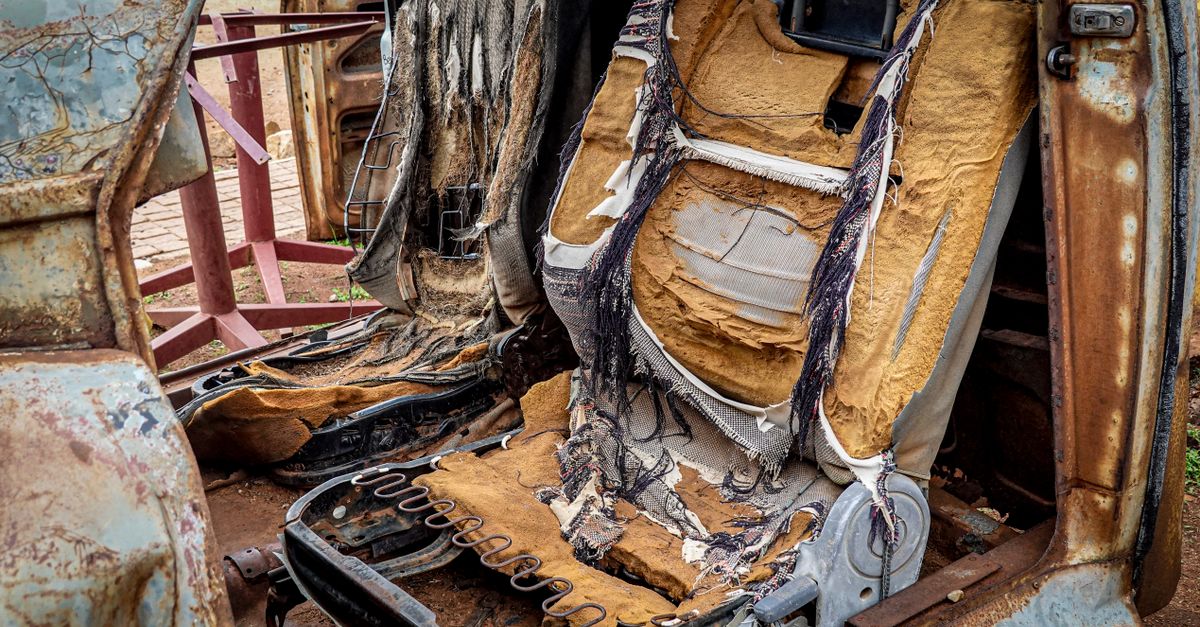
Then there’s the cabin itself. Carpet padding and seat foam hold water for a long time, and a car that wasn’t stripped and dried properly can grow mold. Besides the smell, that can be a real concern for anyone with allergies or respiratory problems. A thorough professional repair of a flooded car is expensive, which is why many are declared total losses in the first place.
Airbag systems deserve particular attention. Crash sensors and the airbag control module often sit low in the car, and water damage can leave the system unreliable in ways that don’t always trigger a warning light. That is a safety issue, not just a repair cost.
How Flooded Cars End Up Back on the Market
When an insured car is flooded, the insurer typically inspects it, pays the owner and declares it a total loss if repairs would cost too much relative to the car’s value. The car is then usually sold at a salvage auction, and the motor vehicle agency in the state or province where it’s registered may apply a brand such as flood or salvage to the title or ownership document. Rules about when a brand is required, and what it’s called, differ from one jurisdiction to another.
Some of those cars are bought by rebuilders who repair them and resell them with the brand disclosed, which is legal. Others end up with sellers who clean them cosmetically and move them to a region where buyers aren’t thinking about floods. Transferring a car through a jurisdiction with looser branding rules can occasionally produce a new ownership record without the brand, a practice often called title washing.
Not every flooded car gets branded. If the owner had no comprehensive coverage, or chose not to file a claim, the car may never appear in any insurance or salvage record. The owner might dry it out and sell it privately without mentioning the water. That’s why record checks alone can’t clear a car, and why the physical inspection matters so much.
Checks You Can Do With Your Nose and Hands
Start with smell. Close the doors and windows for a few minutes on a warm day, then open a door and breathe in. A musty, mildewy odor is a classic sign of water intrusion. So is an overpowering air freshener or a strong shampoo scent, which may have been used to cover it up. Run the air conditioning and heater; a damp, sour smell from the vents can mean moisture inside the system.
Then use your hands and a flashlight on the areas that are hard to clean.
- Carpet and padding: press firmly in the footwells and under the seats; dampness or a crunchy, stiff feel suggests the padding has been wet.
- Seat tracks and bolts: rust on the seat rails or mounting bolts is unusual in a dry cabin and common after flooding.
- Seat belts: pull each belt out to its full length and look for water lines, staining or grit near the end of the webbing.
- Trunk and spare tire well: lift the floor panel and look for silt, standing water, rust or a water line on the walls.
- Carpet that doesn’t fit: brand-new carpet in an older car, or carpet that looks loose or mismatched, can mean the original was ripped out.
Also look in the glove box, the center console and the door pockets. Mud, sand or a faint water line in these small compartments is easy to miss during a hasty cleanup.
Looking Behind Panels and Under the Dashboard
Get down in the driver’s footwell and shine a light up under the dashboard. Wiring harnesses and connectors should look clean and dry. Green or white crust on connectors, corrosion on metal brackets or rust on the pedal assembly are strong indicators of past water exposure, because those parts sit well above the floor and rarely rust in a car that has stayed dry.
Check the headlights and taillights for fogging, a visible water line or droplets inside the lens. One fogged lamp may just be a failed seal, but several at once, or a line of dried residue across the housing, is more telling. Look behind the kick panels near the door hinges if you can pull them back, and inspect the door speakers through the grilles for water stains.
Under the hood, look for silt or debris in crevices around the engine, dried mud on the underside of the hood insulation, and water marks on the air filter box. Pull out the engine air filter if it’s easy to reach; a filter that’s been wet often shows staining or a tide line. Under the car, heavy fresh rust on components that should only show light surface rust for the car’s age is another clue.
Electrical and Mechanical Warning Signs
During the test drive, work every electrical feature more than once: power windows, locks, mirrors, seats, lights, wipers, the infotainment system, heated seats, the backup camera and every switch you can find. Intermittent faults are typical of water damage. A window that goes down slowly, a dash display that flickers, or a feature that works on the second try but not the first all deserve attention.
Watch the dashboard for warning lights that come and go, particularly the airbag, anti-lock brake and traction control lights. Check whether the gauges have condensation behind the glass. If you have an inexpensive scan tool, or your mechanic does, a long list of stored communication or module fault codes on a car that otherwise seems fine is a classic sign of electrical trouble.
Mechanically, check the engine oil and transmission fluid for a milky or cloudy appearance, which can indicate water contamination. A grinding noise from the wheels, brakes that feel rough or a transmission that shifts oddly can all trace back to water exposure, though they have many other causes as well.
Records That Can Confirm or Clear Your Suspicions
Run a vehicle history report using the VIN you read from the car. Look for any flood, salvage, water damage or total loss entries, and pay close attention to where the car was registered and when. A car that was registered in an area hit by a major flood around the time of the storm, and then moved and re-registered far away shortly after, deserves a very careful inspection even if no brand appears.
Some insurance industry crime-prevention organizations offer a free VIN lookup that shows whether an insurer reported the vehicle as a total loss or flooded. It’s worth running alongside a paid history report, since the two draw on different data. Neither will catch a flooded car that never went through an insurance claim, which is why these checks back up your inspection rather than replace it.
Finally, ask your independent mechanic specifically to look for flood damage during a pre-purchase inspection. Tell them why you’re suspicious. A mechanic who knows to lift the carpet, check the connectors under the seats and scan every module will find things a general inspection might pass over.
When the Price Seems to Explain Itself
A car priced well below similar listings, from a seller who is vague about its history, with a musty smell and new carpet, is telling you a story. You don’t need absolute proof to walk away; any two or three of the signs above are reason enough to keep looking. There will always be another car.
If you discover flood damage after buying, act quickly. Have a mechanic document the damage in writing, check whether the seller was required to disclose it under the rules in your state or province, and contact the consumer protection office or dealer regulator if you believe the damage was knowingly concealed. Keep the listing, your messages and the history report; they can support a claim if one is possible.